



For decades, the fitness industry has been dominated by the mantra "no pain, no gain." However, for fathers in their 40s, 50s, and beyond, this mentality often leads to a cycle of injury and recovery. We frequently see dads who desperately want to stay active but are held back by nagging knee pain, stiff shoulders, or lower back discomfort.
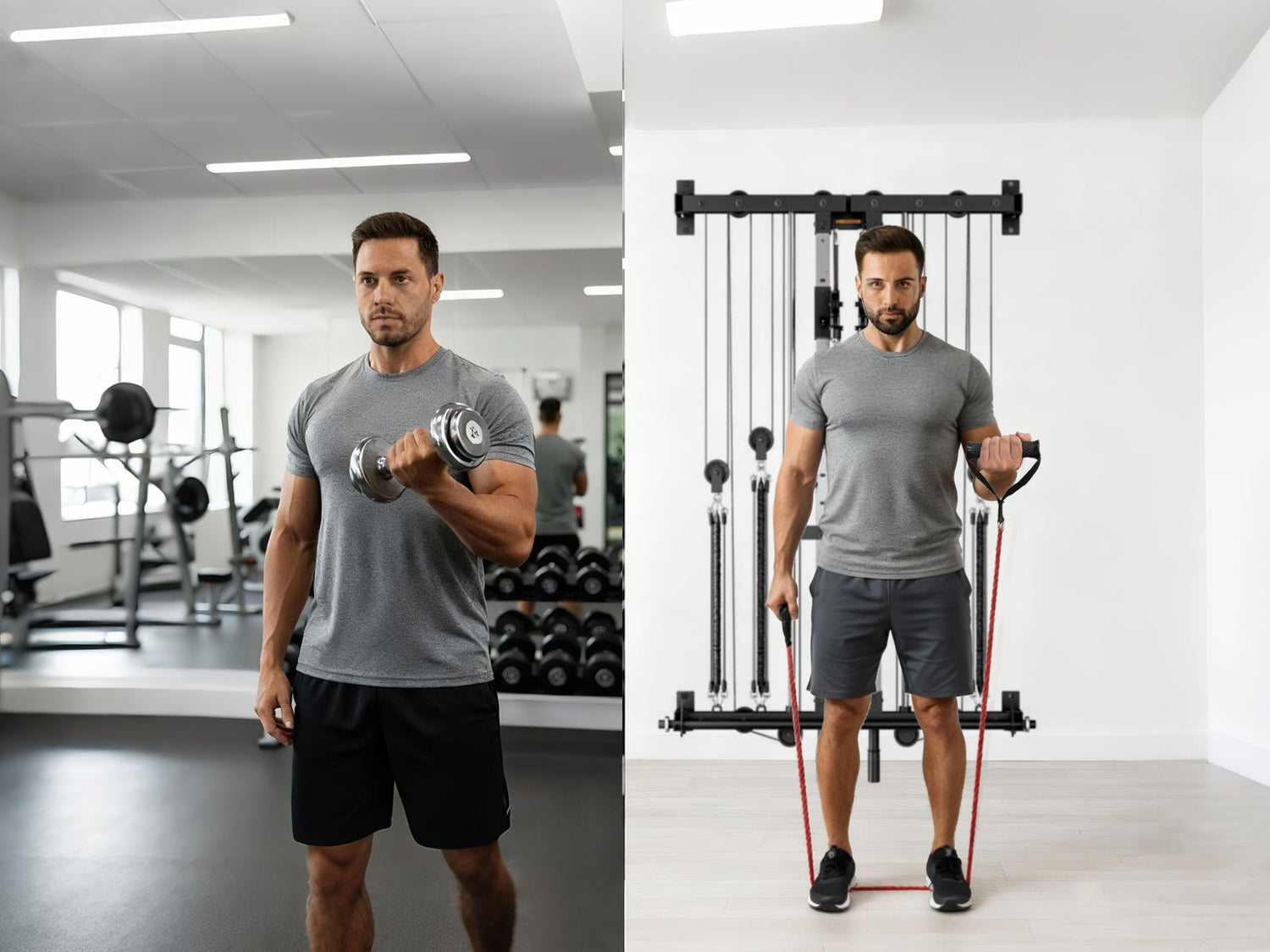
The fear isn't just about acute injury; it's about the cumulative wear and tear on the body. Traditional free weights (like barbells and dumbbells) rely heavily on gravity, meaning the resistance is constant and unyielding. At the "sticking point" of a movement—where your joints are most vulnerable—the weight feels heaviest. This is where injuries happen.
The Science of Aging Joints: Why Gravity is the Enemy
According to research published in the Journal of Orthopaedic & Sports Physical Therapy, as we age, the cartilage in our joints thins, and synovial fluid production decreases. This reduces the joint's ability to absorb shock.
When a 55-year-old performs a standard barbell squat, the compressive force on the knees and spine is significant. If his form breaks down even slightly due to fatigue, the risk of a meniscus tear or lumbar strain skyrockets. This is why many older adults abandon strength training altogether, leading to sarcopenia (muscle loss), which ironically puts more stress on their joints because muscles act as shock absorbers.
The Solution: Variable Resistance Training (VRT)
This is where modern biomechanics changes the game. Instead of fighting constant gravity, we need to fight Variable Resistance.
Studies on elastic resistance (bands and springs) suggest that they provide an "accommodating resistance" curve. This means:
- At the bottom of the movement (weakest point): The resistance is lighter, allowing the joint to move safely through its full range of motion without excessive shear force.
- At the top of the movement (strongest point): The resistance increases, matching the muscle's natural strength curve.
This mechanism significantly reduces peak joint torque while still providing enough stimulus to build muscle and bone density.
3 Joint-Safe Exercises for Dads (And How to Do Them Safely)
If you are looking to get dad moving again, or if you are a dad looking to restart, here are three exercises that prioritize joint health:
1. The Box Squat (Knee Saver)
Unlike a regular squat, sitting back onto a box or bench forces the hips to take the load rather than the knees. It teaches proper hip-hinge mechanics and prevents the knees from traveling too far forward.
2. The Floor Press (Shoulder Saver)
Lying on the floor limits the range of motion of the bench press. Your elbows touch the floor before your shoulders can over-extend. This protects the rotator cuff while still blasting the triceps and chest.
3. Pallof Press (Back Saver)
A core stability exercise done standing with a cable or band. It builds anti-rotation strength, which is crucial for protecting the lower back during daily activities like gardening or lifting groceries.
Why the Vimexciter MF-03 is the Perfect Tool for This
While bands are great, they can be awkward to set up. This is where the Vimexciter MF-03 Professional Wall-Mounted Smith Machine stands out. It combines the safety of a fixed-path Smith Machine with the joint-friendly benefits of VRT technology.
By utilizing a unique system of power springs and resistance bands integrated into the frame, the MF-03 creates a smooth, non-jarring resistance curve. It mimics the feeling of heavy iron without the crushing gravity. Plus, being wall-mounted and foldable, it doesn't clutter the garage, making it the ideal, safe sanctuary for dad's daily workout.


Leave a comment
This site is protected by hCaptcha and the hCaptcha Privacy Policy and Terms of Service apply.