



JOINT-FRIENDLY FITNESS / STRENGTH TRAINING
Your Joints Hate Your Workout? Try These Strength Moves
Your muscles should feel challenged. Your joints shouldn't feel punished.
You finish a workout expecting that satisfying muscle fatigue.
Instead, your knees ache. Your shoulders feel uncomfortable. And getting up the next morning? Not exactly fun.
Sound familiar?
Here's the thing: Strength training is supposed to make your body stronger, not leave you dreading your next workout.
As we get older, maintaining muscle strength becomes increasingly important. But that doesn't mean every workout needs heavy weights, explosive movements, or endless repetitions.
Sometimes, training smarter means choosing movements that challenge your muscles while respecting your body's limits.
That's where joint-friendly strength training comes in.
01 / THE REAL PROBLEM
Your Joints Aren't the Enemy. Your Workout Might Need Adjusting.
Let's clear something up.
Feeling your muscles work during exercise is normal. But sharp pain, increasing joint discomfort, or lingering swelling shouldn't be ignored.
And no, pushing through pain isn't a badge of honor.
Common training mistakes can make workouts unnecessarily uncomfortable:
4 Mistakes Worth Avoiding
- Too much, too soon: Increasing resistance before your body is ready.
- Poor exercise technique: Sacrificing controlled movement to finish another repetition.
- Ignoring discomfort: Continuing movements that consistently cause joint pain.
- Skipping recovery: Training intensely without allowing enough time between sessions.
These mistakes don't mean strength training is bad for your joints.
They mean your training approach may need a few adjustments.
The goal isn't to lift the most weight. It's to build strength you can actually use.
Persistent, worsening, or unexplained joint pain deserves assessment by a qualified healthcare professional before you continue challenging the affected area.
02 / TRAIN SMARTER
What Makes Strength Training More Joint-Friendly?
Joint-friendly doesn't mean easy.
And it definitely doesn't mean your muscles can't get stronger.
It means choosing exercises and resistance levels that allow you to move with control and stay within a comfortable range of motion.
Focus on These 4 Principles
Move smoothly instead of relying on momentum or sudden, jerky repetitions.
Choose a resistance level that challenges your muscles without forcing you to sacrifice technique.
Work through a range you can control comfortably. You don't need to force every joint to its maximum range.
Increase resistance, repetitions, or training volume gradually as your strength improves.
Train with control. Build with consistency. Progress at your own pace.
03 / THE EXERCISES
5 Joint-Friendly Strength Moves Worth Trying
Ready to rethink your workout?
These five low-impact strength exercises can be adapted to different fitness levels using bodyweight, resistance bands, or suitable cable training equipment.
Start with light resistance and avoid movements that cause pain.
MOVE 01 / LOWER BODY
Chair Squats
Targets: Quadriceps, glutes, hamstrings
Forget rushing through deep squats if they don't feel comfortable.
Start with a sturdy chair. Slowly lower yourself toward the seat, then stand back up using your leg muscles.
Chair squats help develop strength for everyday movements such as standing and climbing stairs.
TRY: 2 sets × 8–12 reps
MOVE 02 / UPPER BODY
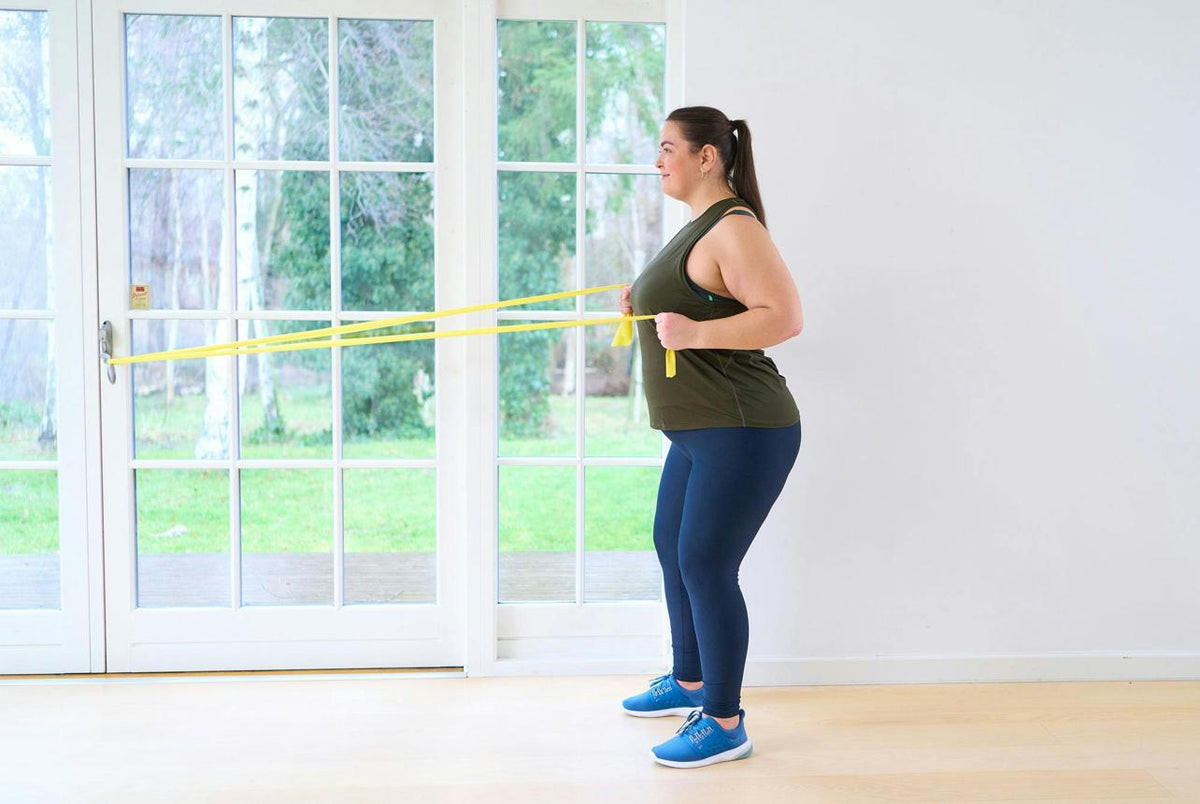
Standing Resistance Rows
Targets: Back, biceps, upper back muscles
Want to strengthen your upper body without loading a heavy barbell?
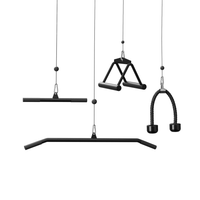
Try standing rows using a securely anchored resistance band or cable system.
Pull the handles toward your torso while keeping your shoulders relaxed and your movement controlled.
TRY: 2 sets × 10–12 reps
MOVE 03 / CHEST
Standing Chest Press
Targets: Chest, shoulders, triceps
You don't need a heavy bench press to challenge your chest muscles.
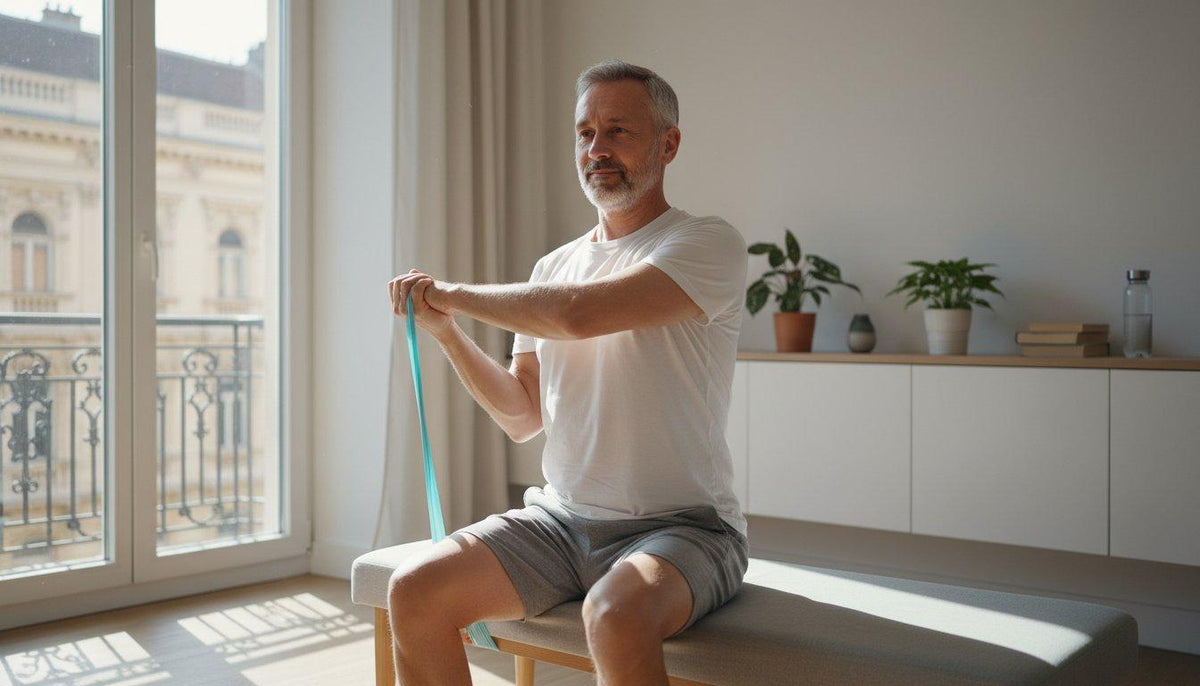
Using a properly secured resistance band or cable machine, press forward from chest height.
Keep your wrists neutral and elbows in a comfortable position. Return slowly without forcing your shoulders backward.
TRY: 2 sets × 10–12 reps
MOVE 04 / ARMS
Resistance Biceps Curls
Targets: Biceps
Simple doesn't mean ineffective.
With your elbows close to your body, slowly curl the resistance handles toward your shoulders.
Lower with control, keeping your wrists comfortable and avoiding swinging movements.
TRY: 2 sets × 12 reps
MOVE 05 / CORE
Standing Pallof Press
Targets: Core stabilizers
Not every core workout needs endless crunches.
Stand sideways to a securely anchored resistance band or cable system. Hold the handle at chest height, then slowly press your hands forward while keeping your torso steady.
This exercise challenges core stability without requiring repeated spinal bending.
TRY: 2 sets × 8–10 reps per side
TRAINING TIP: Warm up for 5 minutes, begin with light resistance, and rest 45–90 seconds between sets as needed. Stop any exercise that causes sharp or increasing joint pain.
04 / THE BIG PICTURE
Over 40? Strength Training Matters More Than You Think.
Here's something worth knowing.
As we age, maintaining muscle strength becomes increasingly important for staying active and independent.
Regular resistance training can help maintain muscle mass, support bone health, and improve the strength needed for everyday activities.
And you don't need to train like a professional athlete to benefit.
Getting older doesn't mean giving up strength training. It means finding a smarter way to keep moving.
For many adults, two strength training sessions per week can be a practical starting point.
Start with movements you can perform comfortably and gradually build up as your strength and confidence improve.
If you have arthritis, an existing injury, or persistent joint symptoms, ask a healthcare professional or physical therapist which movements are appropriate for you.
05 / HOME TRAINING
Why Resistance Bands Deserve a Spot in Your Home Workout
Not every strength workout requires a rack of heavy dumbbells.
Resistance bands can be a practical choice for people who want a compact, adjustable approach to strength training.
Unlike fixed-weight equipment, elastic bands create resistance as they stretch, allowing you to challenge your muscles through different exercises.
What Makes Them Useful?
- Lightweight and compact: Convenient for home workouts.
- Versatile: Suitable for a wide range of upper- and lower-body exercises.
- Adjustable challenge: Different bands and setups offer different resistance levels.
- Controlled training: Exercises can be performed slowly within a comfortable range of motion.
Resistance bands aren't automatically safer for every joint condition, and their resistance changes as they stretch. Proper setup, technique, and appropriate resistance still matter.
The best equipment is the equipment that helps you train consistently and comfortably.
MEET VIMEXCITER MF03
Build Strength at Home With VIMEXCITER MF03
Strength training shouldn't feel like a battle against your body.
If you're looking for a more convenient way to build a consistent home workout routine, the VIMEXCITER MF03 offers a compact resistance training solution for a variety of full-body exercises.
Its variable resistance band system allows you to challenge your muscles through controlled movements, with resistance increasing as the bands stretch.
From standing rows and chest presses to arm exercises, MF03 makes it easier to bring versatile strength training into your everyday space.
Train with control. Build strength with confidence. Keep moving at your own pace.
EXPLORE VIMEXCITER MF03 →

Leave a comment
This site is protected by hCaptcha and the hCaptcha Privacy Policy and Terms of Service apply.